

Performance Isn't a Feature
It's the Foundation
In blockchain, performance isn't a feature; it's the entire foundation. A single missed attestation, a slow API response, or a node constantly fighting to sync isn't just an annoyance; it's a direct threat to your revenue and reputation.
Your validator, dApp, or exchange demands hardware that never compromises. This is why the most serious projects in Web3 are abandoning the 'easy' cloud and coming home to the raw, unthrottled power of bare metal.

The Bedrock of Blockchain
Defining Your Dedicated Server
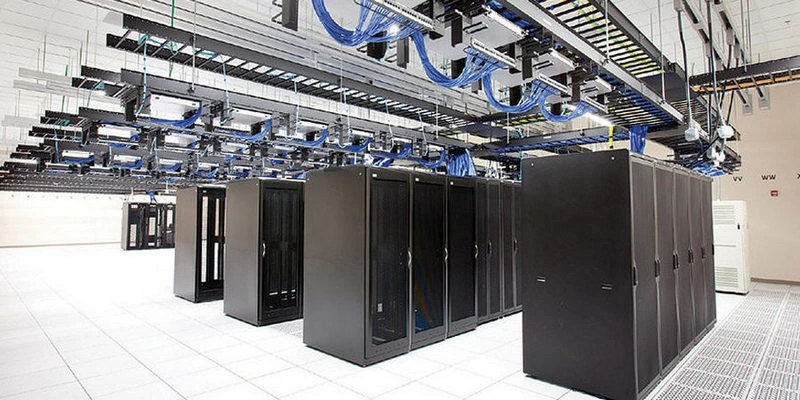
A Dedicated Blockchain Server is a physical, bare metal machine provisioned exclusively for your workload. It is the antithesis of a shared cloud VPS.
When you get a dedicated server from EPY Host, it means:
100% Guaranteed Resources
All CPU cores, all 128GB of RAM, and all 2TB of NVMe storage are yours alone. You are the only tenant.
Zero Resource Contention
You will never be slowed down by a "noisy neighbor." Your node's performance is stable, predictable, and consistently high.
Total Root Access
You have complete control. Install any OS (Linux, Windows), optimize the kernel, and run any client software (Geth, Solana, Prysm) without restrictions.
Peak I/O Performance
A dedicated server with local enterprise-grade NVMe SSDs provides the low-latency, high-throughput storage that chains like Ethereum, Solana, and Aptos demand.
The 'Cloud' Illusion: Why Shared Resources Will Cost You Everything
Many projects begin on a "cheap" cloud VPS or a "convenient" managed node-as-a-service platform. They quickly discover these solutions are a trap, designed to fail under the real-world load of a blockchain.
The High-Cost Architectural Constraints of Cloud VPS
I/O Bottlenecks
This is the #1 killer. Cloud storage is network-attached and heavily throttled. A blockchain node (like Geth or Erigon) requires massive, sustained I/O to write to its database. A VPS simply cannot keep up, leading to sync times that take days or weeks, or a node that is perpetually "out of sync."
The "Noisy Neighbor" Effect
On a shared VPS, you are competing for CPU, RAM, and disk I/O with hundreds of other virtual machines. One resource-hungry neighbor can throttle your node, causing you to miss validator attestations (costing you slashing penalties) or slow down your dApp.
Unpredictable Metered Bandwidth Costs
Blockchain nodes are network-chatty. Cloud providers (like AWS and Azure) are notorious for their exorbitant egress bandwidth fees. A busy public RPC node can easily result in a shocking, unpredictable five-figure monthly bill due to data transfer overages.
The "Managed Node" Black Box
Using a managed node provider introduces a single point of failure and centralization. You are trusting their infrastructure. If they go down, so does your application. You have no control over the underlying hardware, client versions, or security.
Take Back Control: The EPY Host Bare Metal Advantage
We are not generic cloud resellers. We are dedicated server experts who understand the unique demands of Web3. We provide the raw, unthrottled power that mission-critical infrastructure requires.
Extreme I/O Performance
Enterprise-grade NVMe SSDs are our standard, providing the blistering-fast I/O your node needs to process transactions and sync without a bottleneck.
100% Uncontended Resources
When you buy a server with 16 cores and 128GB of RAM, you get all 16 cores and all 128GB, 24/7. No sharing, no throttling, ever.
Transparent, High-Volume Bandwidth
Run a public RPC node or seed the chain without fearing a surprise bandwidth bill. Our transparent plans are built for data-heavy applications.
Total Root Access & Control
Your server, your rules. Install any OS (Ubuntu, Debian, CentOS, Windows Server), run any client, and optimize your stack your way.
Rock-Solid Infrastructure
All EPY Host servers are housed in secure data centers and include robust DDoS protection to keep your node online and secure from network-level attacks.
24/7 Expert Support
While you manage your software, our team of experts is on-site 24/7 to guarantee your hardware, power, and network are running at 100%.
Battle-Tested Blueprints: Find Your Perfect Build
We've pre-configured and battle-tested several builds optimized for the most common blockchain workloads.
| Workload | Recommended CPU | Recommended RAM | Recommended Storage |
|---|---|---|---|
|
Ethereum Validator
(Solo Staker)
|
6-8+ Cores (e.g., AMD Ryzen 5, Intel Xeon-E) |
32GB - 64GB DDR4 ECC | 2x 2TB NVMe SSD (Gen4) |
|
High-Performance Validator
(e.g., Solana, Aptos)
|
12-16+ High-Clock Cores (e.g., AMD Ryzen 9, EPYC) |
128GB - 256GB DDR4/DDR5 ECC | 2x 2TB or 2x 4TB NVMe SSD (Gen4/5) |
|
dApp / Public RPC Node
(High-Traffic)
|
16-32+ Cores (e.g., AMD EPYC, Intel Xeon-Gold) |
128GB - 512GB DDR4/DDR5 ECC | 4x 2TB NVMe SSD (RAID 10 for I/O) |
|
ZK-Proof / Research
(Compute-Heavy)
|
32-64+ Cores (e.g., AMD EPYC / Threadripper) |
256GB - 1TB+ DDR4/DDR5 ECC | High-Speed NVMe Storage |
|
Private Enterprise Blockchain
|
Varies (Custom) | Varies (Custom) | Varies (Custom) |
The EPY Host Arsenal: Powering Every Web3 Vertical
Our hardware is the foundation for the entire Web3 stack. We provide the power for:
Blockchain Businesses & Exchanges
Run your exchange's hot wallets, internal ledgers, and public-facing API endpoints on secure, single-tenant hardware. Isolate your critical infrastructure from the risks of shared platforms.
Your Stack, Your Rules: Total Protocol & Tooling Freedom
We are the "metal" beneath the world's most demanding Web3 applications. EPY Host provides the flexible, powerful bare metal foundation for any blockchain stack.
Layer 1 (L1) Protocols
- Ethereum (PoS): Geth, Lighthouse, Prysm, Teku, Nethermind, Erigon
- Solana: solana-validator, Jito-Solana, Triton
- Bitcoin: Bitcoin Core (bitcoind), LND, Core Lightning
- Cosmos Ecosystem: gaiad (Cosmos Hub), osmosisd, celestia-appd
- Avalanche: AvalancheGo
- Polkadot / Kusama: Polkadot Client
- Aptos & Sui: aptos-node & sui-node
- Cardano: cardano-node
Layer 2 (L2) Rollups & Sidechains
- Polygon: Bor (PoS), Heimdall, zkevm-node
- Arbitrum: nitro-node (Arbitrum One & Nova)
- Optimism: op-node & op-geth
- zkSync: Full nodes for Era and Lite
Decentralized Infrastructure
(DePIN, Oracles, Storage)
- Chainlink: chainlink-node
- The Graph: graph-node (Indexers)
- Filecoin & Arweave: Lotus, Forest (Storage Providers)
Your DevOps & Orchestration Tools
Running a node is more than just the client.
- Orchestration: Docker, Kubernetes (K8s)
- Monitoring: Prometheus, Grafana, Alertmanager
- Automation: Ansible, Terraform, Puppet
- Security: fail2ban, iptables, and custom firewalls
Build on Bedrock. Deploy with Confidence.
Stop gambling with shared resources and unpredictable cloud bills.
Talk to an EPY Host blockchain server expert today, and we'll help you configure the perfect bare metal solution for your performance, security, and budget needs.
See All Dedicated Servers
Browse our full range of pre-configured blockchain servers optimized for every workload.
View ServersContact Sales for a Custom Quote
Talk to an EPY Host blockchain server expert today and configure your perfect solution.
Contact SalesClarity in Detail
Your Blockchain Server FAQs
The three main reason is I/O. Blockchain nodes are constantly writing to their database. A shared VPS uses network-attached, throttled storage. Our dedicated servers use local, enterprise-grade NVMe SSDs, which are 10-100x faster and provide the consistent, low-latency I/O needed to stay in sync. You also get 100% dedicated CPU and RAM, so your node is never throttled.
For an Ethereum node (like Geth), you need at least 2TB of fast NVMe storage. We recommend 2x 2TB NVMe drives to future-proof your setup. For a Solana validator, the requirements are even higher; 2x 2TB NVMe drives (Gen4 or faster) in a RAID 0 configuration is a common setup for maximum performance.
Absolutely. This is a key benefit of a dedicated server. With full root access, you have more than enough power to run your execution client (Geth, Nethermind) and your consensus client (Lighthouse, Prysm) on the same machine. You can even use Docker or virtualization to run nodes for entirely different chains.
This depends heavily on your use case. A private validator uses less bandwidth than a high-traffic public RPC node. At EPY Host, we offer generous multi-terabyte and unmetered bandwidth plans, so you can run your node without the fear of massive overage charges common with cloud providers.
EPY Host provides 24/7/365 support for your hardware and network. We guarantee your server is online, power is stable, and network is fast. As these are self-managed dedicated servers, you are responsible for the software installation, configuration, and management. This gives you the full control and flexibility that serious blockchain projects demand.