

The Challenge: Powering Data-Intensive Workloads
Modern data workloads are defined by bottlenecks. In a shared cloud environment, you are fighting for resources, leading to:
I/O Starvation
Your powerful GPUs sit idle, "starving" for data because your storage can't keep up with the preprocessing (ETL) and data-loading pipeline.
Resource Contention
"Noisy neighbors" on the same physical hardware consume CPU, RAM, or network bandwidth, causing unpredictable drops in performance and inconsistent model training times.
Throttling & Latency
Shared environments often impose hidden limits on sustained resource usage, creating critical latency that makes real-time analytics or algorithmic trading impossible.
Runaway Costs
The pay-per-second model of public clouds becomes a financial drain for 24/7/365 workloads. Sustained GPU compute and high data egress fees lead to shocking monthly bills.
For AI and Big Data, compromise is not an option.
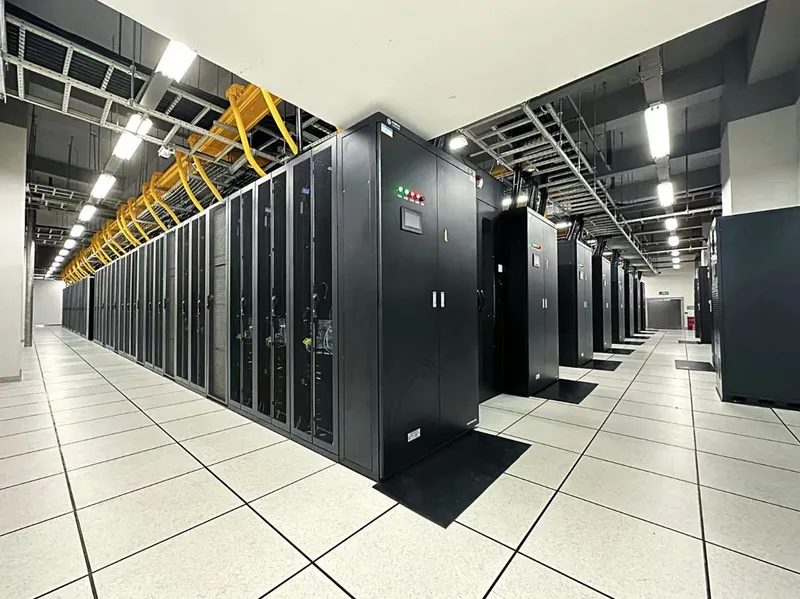
The Solution: The EPY Host Dedicated Server Advantage
A dedicated server is the ultimate solution for serious AI, ML, and Big Data applications. It's not just a server; it's your high-performance computing (HPC) cluster in a box, giving you the single-tenant, bare-metal environment you need to win.
When you choose EPY Host, you get:
Uncompromising Performance
You command 100% of the server's resources. All CPU cores, all the RAM, and the full power of dedicated NVIDIA GPUs are yours alone. No hypervisor, no throttling, no excuses.
Massive Compute Power
Equip your server with the latest Intel Xeon or AMD EPYC processors. This gives you high core counts for parallel processing and, crucially, the maximum number of PCIe 5.0 lanes to feed your GPUs without a bottleneck.
Blazing-Fast Storage
Use multiple Gen4/Gen5 NVMe SSDs in high-performance RAID 0, RAID 1, RAID 5 or RAID 10 configurations. This eliminates I/O bottlenecks, ensuring your powerful GPUs are constantly fed with data.
Total Control & Security
A single-tenant, bare-metal environment gives you full root access. You control the OS (Ubuntu, AlmaLinux, CentOS, Debian, Rocky Linux, Windows etc.), the software stack (Docker, Kubernetes, PyTorch), and your security policies, making compliance (like HIPAA or GDPR) straightforward.
Predictable Costs
Unlike the cloud, where GPU instances and data egress fees create shocking bills, our dedicated servers offer a flat, predictable monthly cost. Run your models 24/7/365 without watching the clock.
How to Configure Your Ideal Server for AI, ML & Analytics
Building the perfect server means matching the hardware to the workload. A server for Big Data analytics looks very different from one built for Deep Learning. Here’s what matters:

For AI & Machine Learning
For ML, the GPU is king. It performs the parallel matrix calculations that form the basis of deep learning.
GPU (The Engine)
Your choice depends on training vs. inference.
-
Heavy Training
Choose high-end NVIDIA H100 or A100 Tensor Core GPUs. The key metric is VRAM (GPU Memory). More VRAM (80GB+) allows for larger models and bigger batch sizes, drastically cutting training time.
-
Inference & Development
NVIDIA RTX 4090 or A5000 series cards provide an exceptional price-to-performance ratio for running trained models (inference) or for R&D.
CPU (The Conductor)
The CPU prepares and feeds data to the GPU. You need a modern CPU (like AMD EPYC) with high-clock speeds and plenty of PCIe 4.0/5.0 lanes to ensure a full-speed connection to your GPUs.
RAM
A good rule of thumb is to have at least 2x the total VRAM of your GPUs as system RAM (e.g., 256GB of RAM for a server with 128GB of total VRAM).
Storage
Use Gen4/Gen5 NVMe SSDs for your primary datasets and OS. Slow storage is the #1 bottleneck for GPU-bound workloads.

For Big Data Analytics
For Big Data (running Spark, Hadoop, or in-memory databases), the focus shifts to CPU cores, RAM capacity, and storage throughput.
CPU (The Workhorse)
Choose processors with a high core count, like the AMD EPYC series (64, 96, or even 128 cores). This allows you to run many parallel processing tasks and data-shuffling operations.
RAM (The Workspace)
This is your most critical component. More RAM is always better. 512GB, 1TB, or even 2TB of high-speed ECC RAM allows you to hold massive datasets in memory, skipping slow disk I/O and enabling real-time analytics.
Storage
A large array of NVMe SSDs (for hot data) and high-capacity SATA SSDs (for warm data) provides the perfect balance of speed and cost for fast data ingestion (ETL) and rapid querying.
Need help building your perfect AI server?
Our experts at EPY Host can help you custom-configure a bare-metal server tailored to your specific framework, models, and data sets.
Popular Use Cases on EPY Host Servers
Your data-intensive applications demand environments without compromise. Shared platforms create bottlenecks, but an EPY Host dedicated server provides the guaranteed, single-tenant resources you need to process, train, and deploy at full speed.
Here is how our bare-metal servers power the world's most demanding applications.
Business & Finance
Business Intelligence (BI)
A dedicated server gives your BI platforms (like Tableau Server or Power BI Report Server) exclusive access to high-core CPUs and massive RAM. This allows you to run complex, ad-hoc queries on terabyte-scale datasets and get answers in seconds, not hours.
Predictive Analytics
Building accurate predictive models requires iterating over massive historical datasets. A dedicated server with powerful multi-core CPUs (like AMD EPYC) and fast NVMe storage allows your data scientists to run complex regressions and simulations 24/7.
Real-Time Fraud Detection
In fraud detection, a millisecond delay can cost thousands. Dedicated servers provide the extreme low-latency and I/O throughput necessary, allowing your applications to ingest and cross-reference millions of transactions per second.
Algorithmic & High-Frequency Trading (HFT)
Trading algorithms live and die by latency. A dedicated server gives you the ultimate advantage: a direct, high-bandwidth network connection and 100% of the CPU's processing power, eliminating the "jitter" and lag of virtualized environments.
Financial Market Analysis
Running complex Monte Carlo simulations or processing real-time market data streams is too intensive for a shared environment. A dedicated server provides the sustained CPU and memory resources to run continuous analysis with superior security.
AI & Deep Learning
Deep Learning (TensorFlow, PyTorch)
Training a deep learning model is a pure HPC workload. Our dedicated GPU servers, equipped with multiple NVIDIA H100 or A100 cards, provide the raw parallel processing power to slash training times from weeks to days, or even hours.
Artificial Neural Networks (ANN)
A dedicated server provides the ideal, stable environment for training and running your ANNs. The combination of dedicated high-speed RAM and fast NVMe storage ensures your powerful GPUs are never left "starving" for data.
Natural Language Processing (NLP)
Large Language Models (LLMs) like BERT or GPT have massive memory requirements. A dedicated GPU server with 128GB, 256GB, or more of system RAM is essential for loading large models and datasets entirely into memory.
Chatbots & Virtual Assistants
To provide instant, intelligent responses, a chatbot needs to run its inference model with minimal latency. A dedicated server provides the consistent, low-latency performance required, and full root access allows you to fine-tune your stack.
Image & Face Recognition
Processing high-resolution images or real-time video feeds requires immense computational power. Our dedicated GPU servers allow you to run complex Computer Vision (CV) models in parallel for large-scale photo tagging or real-time security monitoring.
Data Science & Research
Statistical Modelling
Running complex statistical models in R or Python on large datasets can max out a local workstation instantly. A dedicated server with high core-count CPUs and large amounts of ECC RAM allows you to run these demanding calculations without interruption.
Anomaly & Pattern Recognition
Whether in cybersecurity (detecting network intrusions) or manufacturing (identifying production faults), anomaly detection requires constant, high-speed data analysis. A dedicated server provides the guaranteed I/O and processing power to analyze millions of data points in real-time.
Genomics & Computational Chemistry
Scientific research, such as gene sequencing (BLAST) or molecular modeling, generates and processes petabytes of data. A dedicated server with high-core CPUs, massive RAM (512GB or 1TB+), and a large, high-speed NVMe storage array gives you a personal supercomputer.
Structural Analysis (FEA)
Engineers running Finite Element Analysis (FEA) or Computational Fluid Dynamics (CFD) need to solve complex systems of equations. Offloading these "solver" jobs to a dedicated EPY Host server frees up your local workstation and completes the simulation in a fraction of the time.
Scientific Modelling & Simulation
From climate modeling to physics simulations, research applications need to run for days or weeks at full power. A dedicated server is the only platform that guarantees 100% of the CPU and RAM resources for the entire duration of the job.
Frequently Asked Questions
Why choose a dedicated server over AWS or Google Cloud for AI?
The simple answer is Total Cost of Ownership (TCO) and Performance. While cloud is flexible for short-term bursts, the costs for sustained GPU-intensive workloads (like model training) become astronomically high. A dedicated server from EPY Host provides superior price-to-performance, predictable monthly billing, and no data egress fees. You get guaranteed, unthrottled bare-metal resources 24/7 for a fraction of the long-term cost.
Can I install my own software like PyTorch, TensorFlow, and Docker?
Yes. This is the primary advantage of a dedicated server. You get full root access to the machine. You can install any Linux distribution (Ubuntu, AlmaLinux, CentOS, etc.), containerization tools like Docker and Kubernetes, and all the AI/ML frameworks, CUDA libraries, and dependencies you need. You have total control.
How many GPUs can I put in one dedicated server?
EPY Host offers specialized GPU server chassis that can house multiple (e.g., 2, 4, 8, or even 10) dual-slot, high-performance NVIDIA GPUs, connected with high-speed interconnects like NVLink where available. This allows you to build a true HPC powerhouse on a single machine.
What is the difference between a server for AI (ML) and one for Big Data?
An AI/ML server is typically GPU-bound. Its power comes from multiple, high-VRAM NVIDIA GPUs for parallel computation. A Big Data server is typically CPU- and RAM-bound. It needs high core-count CPUs and massive amounts of system RAM (512GB+) to load and process huge datasets in memory.
What kind of support do you offer for these complex servers?
We provide 24/7/365 expert support for all hardware, network, and power-related issues. Our team ensures your server is online and performing at its peak, so you can focus on your code, models, and data. We manage the infrastructure, you manage your application.